
Why Affordable Ammunition Doesn’t Have to Mean Lower Quality

Score Big on Savings with Cheap Ammo That Shoots Straight
Contrary to popular assumption, inexpensive ammunition often delivers accuracy within two inches of premium brands at typical self-defense distances, making it a viable option for regular practice. This cost-effective ammo works by utilizing bulk manufacturing processes and slightly less stringent Shotgun Ammo for Sale quality controls, yet still maintaining reliable ignition and consistent pressure for most modern firearms. Its primary benefit lies in enabling shooters to fire hundreds of rounds without financial strain, thereby building muscle memory and proficiency that directly translates to better handling of any load. To use it effectively, reserve cheap rounds for training and function checks, while verifying zero with your chosen defensive load and inspecting each cartridge for visible defects before loading.
Why Affordable Ammunition Doesn’t Have to Mean Lower Quality
Affordable ammunition often skips the frills—flashy packaging, premium primers, or match-grade QC—but the core projectile and propellant can still be built to solid, functional tolerances. Price reflects manufacturing efficiency, not necessarily safety or reliability, so budget-friendly rounds from reputable brands still undergo pressure testing and use brass or steel cases that cycle reliably. The real cost cutters are bulk production runs and simpler projectiles, not weaker powder charges or thinner case walls. For range practice, this means you get consistent accuracy within practical distances—often within an inch or two of premium loads—while saving enough to shoot twice as much. The key insight is:
cheap ammo fails when you buy unknown mystery stock, not when you buy high-volume, Ammunition for Sale brand-name budget lines designed for training.
Your firearm’s performance depends more on proper cleaning and matching grain weight to your barrel’s twist rate than on the price tag.
What Separates Budget Rounds from Premium Priced Ones
The core difference between budget and premium rounds isn’t inherent danger, but consistency in manufacturing tolerances. Budget ammunition typically uses broader case-mouth dimensions and less uniform powder charges, which translates to wider velocity swings—often 50–100 fps—that shift your point of impact at distance. Premium rounds hold powder weights within a single grain and use sorted bullet weights, giving you tighter, repeatable groups. Budget projectiles may also have a slightly thinner jacket, which can cause more fouling in suppressed barrels. However, for general plinking, steel-case practice, or close-range defensive validation, these variances are irrelevant. What you sacrifice paying premium is strict quality control—not reliability—so budget rounds are perfectly safe, just less mathematically predictable.
How Manufacturers Keep Costs Down Without Sacrificing Reliability
Manufacturers reduce costs by streamlining case production—using brass with slightly thinner walls or boxer-primed steel—while reserving premium components for primers and propellant. Automated high-speed loading lines cut labor expense, but optical sensors and weight-checking stations maintain consistent cartridge reliability by rejecting off-spec rounds before packaging. Bulk powder purchases and simplified projectile designs, like round-nose lead instead of jacketed hollow points, lower material costs without altering pressure curves or ignition timing. Tighter tolerances on case mouth tension and crimp depth are achieved through CNC-controlled tooling, ensuring feeding and extraction remain flawless despite cheaper raw inputs.
When Saving Money Per Round Makes Sense for Your Shooting Goals
Saving money per round makes sense when your primary goal is high-volume practice for established fundamentals, not pushing precision limits. If you’re burning 200 rounds per session on draw-to-fire drills or transition work, the cost difference between budget and premium ammo compounds rapidly without altering your training stimulus. The logical threshold is target size: when engaging steel silhouettes or 8-inch circles inside 15 yards, cheap ammo’s slight accuracy variance stays well under your practical hit zone. Trigger-time economics favor affordable loads for developing muscle memory, recoil management, and cadence—skills that don’t require sub-MOA consistency. However, switch to premium rounds when zeroing optics, competing in accuracy-based matches, or testing defensive loads.
- Assess your drill’s precision demand (large targets = cheap ammo viable).
- Calculate round count per session; savings scale with volume.
- Validate cheap ammo’s point-of-impact shift at your typical engagement distance.
- Reserve premium ammo only for certification or load-validation sessions.
Your shooting goals dictate the breakpoint: pay more only when the target shrinks or the score matters.
How to Compare Prices and Find the Best Deals on Bulk Ammunition
To secure cheap ammo on bulk orders, always calculate the cost per round (CPR) first, not the total sticker price. Compare bulk case prices across at least three online retailers by sorting for “per round” totals, excluding shipping and tax. Look for flat-rate shipping thresholds, as heavy ammo often negates low base prices; adding a few more boxes to hit that limit can drop your final CPR. Use price-tracking sites to check historical lows for specific calibers, ensuring 6.5 PRC Ammo for Sale the current “deal” isn’t just a temporary markup. Finally, consider buying factory seconds or overruns—same performance, significantly lower bulk ammunition price—but verify they’re not remanufactured if that matters to you. Always include any free shipping or cash-back rebates in your per-round math before committing.
Understanding Price Per Round vs. Total Box Cost
When comparing cheap ammo, the sticker price Handgun Ammo for Sale on a box is misleading; you must calculate price per round for true bulk value. A 50-round box at $15 looks cheaper than a 20-round box at $10, but the per-round math shows $0.30 versus $0.50. Always divide total box cost by round count before committing. Shipping and tax inflate the total, so factor those into your per-round figure, not just the shelf price. A higher total box cost can be the better deal if it yields dramatically lower per-round pricing, especially for bulk cases. Ignore sales hype and use a quick calculator on your phone to compare apples to apples.
Total box cost only matters when divided by round count; always compare price per round, including shipping, to find the real cheap ammo deal.
Why Buying in Larger Quantities Lowers Your Overall Expense
Buying ammunition in larger quantities directly reduces your cost per round because retailers price breaks apply at higher case counts, and you pay a single fixed shipping fee spread across more boxes. For example, a 500-round case often costs 15–20% less per cartridge than five separate 100-round boxes, while shipping remains identical. This bulk purchase price advantage also minimizes per-order handling charges and lets you lock in current pricing before future increases. Even if you only shoot 200 rounds monthly, a 1,000-round order stays fresh for months and eliminates frequent reordering, which always carries additive transaction costs. Thus, every extra box you buy simultaneously reduces the marginal expense of every round you already planned to shoot.
Where to Shop: Online Retailers vs. Local Stores for Discounted Prices
When hunting for cheap ammo in bulk, the choice between online retailers and local stores hinges on price versus immediacy. Online sellers frequently offer lower per-round costs because they bypass brick-and-mortar overhead, but you must factor in shipping fees and wait times, which erode savings unless you order large quantities to reach free-shipping thresholds. Local stores, by contrast, let you inspect stock instantly and avoid transfer delays, yet their prices often reflect higher overhead, especially for popular calibers. For maximum discounts, compare online base prices against local shelf prices after calculating tax, shipping, and potential membership perks; a local “sale” can match online deals when the latter includes heavy shipping.
Buy online for the lowest bulk prices when shipping is offset by volume; buy local for immediate pickup and price-matching opportunities on smaller orders.
Which Calibers Offer the Most Savings for Practice and Plinking
The most savings for practice and plinking come from calibers that balance low cost per round with manageable recoil and ample availability. For centerfire, 9mm Luger consistently offers the cheapest ammo per shot, especially when buying bulk brass or steel-case options, often costing half what .45 ACP does while allowing more trigger time for the same budget. For rimfire, .22 LR remains the undisputed king of cheap ammo, delivering pennies-per-round shooting that dwarfs any centerfire savings. If you want a centerfire rifle, 5.56 NATO/.223 Remington beats .308 or .300 Blackout on price, particularly with budget-friendly brands. Q: Which caliber gives the most practice for $50? A: .22 LR, yielding over 500 rounds, while 9mm gives roughly a third of that. Stick to these three—.22 LR, 9mm, and 5.56—and your wallet stays happy at the range.
Popular Budget-Friendly Cartridges Like 9mm, .223, and .22 LR

The most practical savings for routine shooting come from budget-friendly cartridges like 9mm, .223, and .22 LR, each serving a distinct role. For handgun practice, 7mm WSM Ammo for Sale 9mm offers the lowest cost per round among centerfire pistols while retaining recoil similar to carry loads, making it ideal for repetitive drills without breaking the bank. In rifles, .223 Remington provides a flat-shooting, mild-recoil option that keeps semi-auto practice affordable, especially when buying bulk-packed 55-grain loads. However, .22 LR dominates pure plinking, costing roughly a third of 9mm and enabling high-volume trigger time on steel or paper with negligible wear. Choosing between them depends on whether you prioritize realistic recoil or sheer round count; mixing a .22 for warm-ups and a 9mm or .223 for defensive follow-ups maximizes total savings.
9mm, .223, and .22 LR deliver the deepest ammo savings—9mm for defensive practice, .223 for rifle reps, and .22 LR for maximum plinking volume.
Steel Case vs. Brass Case: What’s Cheaper and What Works Best

Steel case ammunition is almost always cheaper than brass, often by 10–20% per box, because steel costs less and the case is non-reloadable. Steel case vs. brass case trade-offs come down to your firearm: steel’s lacquered or polymer coating can cause more bolt wear and occasional extraction issues, while brass expands better for a gas seal, feeds smoother, and supports reloading. For pure plinking, steel works best in AK-pattern rifles or guns with robust extractors, but brass is more reliable in tight-tolerance pistols and precision bolt actions. Steel case saves money per round, but brass saves headaches at the range.
Q: Is steel case worth the lower price for practice?
A: Yes, if your gun runs it reliably—test a few boxes first—but brass is better for defensive loads or high-round-count training where durability matters more than cost.
Matching Lower-Cost Rounds to Your Firearm’s Performance Needs
Matching lower-cost rounds to your firearm’s performance needs starts with distinguishing practice loads from defensive or precision loads. For a full-size pistol, bulk 9mm 115-grain FMJ often cycles reliably and mimics recoil closely enough for drills, but if your gun is tuned for heavier 147-grain carry ammo, the lighter round may malfunction or shift point of impact. Accuracy expectations should be measured against your platform’s inherent mechanical limit, not the ammo’s price tag. A bolt-action rifle hunting .308 will suffer from cheap surplus that groups 3 MOA, while a budget AR-15 chambered for 5.56 might function best with 55-grain steel-case because it replicates the gas pressure of your duty load. Always test a box first to confirm feed, extraction, and zero stability before bulk-buying. Performance-based ammo selection prevents jams and wasted range time despite lower cost.

Match the bullet weight, profile, and velocity to your firearm’s action type and intended drill velocity to maintain reliability and consistent accuracy—savings only count if the gun runs and hits where you aim.
Practical Tips for Storing and Using Economy Ammo Safely
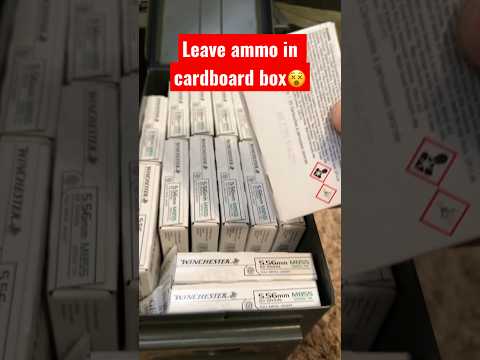
When buying economy ammo, prioritize storage that counters its tendency toward inconsistent seals and primers. Keep bulk boxes in a sealed, airtight container with desiccant packs, because cheap ammunition often has thinner lacquer that absorbs humidity faster, leading to misfires or squibs. Rotate your stock rigorously—use the oldest boxes first, as low-cost powder degrades more visibly over time. Before a range session, hand-inspect each round: check for loose bullets, corroded case mouths, or deep-set primers, since budget manufacturing tolerates more of these flaws. If you encounter a hard primer, do not force a second strike blindly; wait three seconds, keep the muzzle downrange, and eject it. For practice, shoot a five-round test group from your specific firearm first—cheap ammo varies by lot, and that test reveals pressure signs or feeding issues before you commit to a full session.
Track lot numbers on your cheap ammo boxes; a defective batch is best identified and quarantined before it causes Rifle Ammo for Sale a malfunction under stress.
How to Check for Damage or Defects Before Loading
Before feeding bargain rounds into your firearm, a quick tactile and visual once-over is non-negotiable. Run your fingertips along the case mouth; a sharp burr or a rolled edge can cause seating issues or shave lead. Inspect the primer for a proud or flattened strike—a high primer can slam-fire in semi-autos, while a deep-seated one means a likely dud. Check the bullet itself for setback: if you can push it deeper into the case with thumb pressure, discard it. Also, roll the cartridge on a flat surface; any wobble signals a bent case. Finally, shine a light into the case mouth for corrosion or green oxidation, which weakens brass. **Visual and tactile inspection before loading is your cheapest insurance against a ruined range day.
- Scrutinize the primer pocket for excessive sealant that protrudes.
- Look for cracks or stress lines near the case head, a common failure point.
- Check the bullet nose for dents that cause erratic flight paths.
- Ensure the rim is not burred, especially for bolt-action or revolver use.
Best Storage Practices to Keep Budget Rounds Reliable Over Time
To keep budget rounds reliable over time, prioritize a low-humidity environment, as moisture is the primary enemy of cheap ammo’s often less-sealed primers and cases. Store boxes upright in sealed, ammo-specific cans with a desiccant pack, avoiding loose bulk that invites friction and corrosion. Rotate your stock by date—shoot the oldest first—because even quality economy loads degrade faster than premium brands. Avoid temperature swings near heaters or garages; consistent coolness prevents condensation cycles that weaken lacquer seals. Finally, inspect rounds quarterly, discarding any with verdigris or dents, since a single compromised cartridge can jam a magazine and undermine trust in your budget ammo supply.
Cleaning Your Gun More Often When Using Cheaper Propellants

Cheaper propellants often leave a heavier fouling cocktail—think carbon, ash, and unburnt granules—that clings to your chamber and bolt face. This isn’t just cosmetic; residue hardens into glaze that can impede extraction after a hot string. So, bump your cleaning schedule to every 150–200 rounds when shooting budget-friendly loads, not your usual 300-plus. Regular fouling control with cheaper 6.5 Creedmoor Ammo for Sale propellants prevents carbon welding that causes stuck cases or sluggish cycling. Follow this quick sequence:
- Run a wet bore brush with solvent through the barrel and chamber.
- Scrub the bolt face, extractor hook, and gas tube ports with a nylon brush.
- Patch out until clean, then lightly oil—never over-lube—the friction points.
By attacking that gritty buildup sooner, you keep your action reliable without needing premium ammunition.
Common Mistakes to Avoid When Purchasing Discounted Cartridges
The biggest trap when grabbing cheap ammo is ignoring the headstamp, assuming all discounted cartridges share the same brass quality. I once bought a pallet of budget .223, only to find mixed headstamps—some cases were berdan-primed, impossible to reload, and others had cracked necks after a single firing. Never skip a visual inspection of the primer pocket and case mouth, even if the box looks sealed. Another common error is stocking up on a bulk lot without testing a small sample first—cheap ammo can be wildly inconsistent in powder charge, leading to keyholing or squib loads. Also, don’t assume “discounted” means “factory seconds” are safe; inspect for dents, corrosion, or pulled bullets.
One bad batch can ruin your gun, so verify a few rounds before committing to a case.
Finally, check the lot number on the box—mismatched lots often mean a hodgepodge of leftovers, which is a recipe for accuracy headaches.
Not Checking for Remanufactured vs. New Production Labels

When chasing cheap ammo deals, overlooking whether a box contains remanufactured or new production rounds is a costly oversight. Remanufactured cartridges are often priced lower because they use once-fired brass and replaced primers, but their pressure curves and case integrity can vary more than factory-new loads. This inconsistency matters for precision shooting or self-defense, where a single weak or over-pressured round is unacceptable. Always inspect the label: “remanufactured,” “reloaded,” or “factory new” are not interchangeable terms. If the packaging is vague or lacks a clear manufacturing designation, treat it as a red flag rather than a bargain. Your firearm’s reliability and your safety depend on this single check.
- Verify the box explicitly states “new production” specialty sports if you need consistent ballistics.
- Expect remanufactured rounds to have shorter case life and potential sizing inconsistencies.
- Compare headstamp uniformity—mixed brands indicate remanufactured stock, not virgin brass.
- Reject any unlabeled bulk packaging that omits production origin.
Overlooking Shipping Costs That Wipe Out Your Savings
A rock-bottom price per box means nothing if the freight charge obliterates the deal. When you’re hunting cheap ammo online, always calculate the final cost per round *after* shipping before you hit checkout—a $9 box of 9mm can easily become Rimfire Ammo for Sale $14 with a $25 flat fee, killing your savings instantly. Look for free-shipping thresholds, bulk bundle deals where the heavier crate offsets the rate, and compare multiple vendors side-by-side, because one site’s “discount” is another’s break-even trap. Always sort by total landed cost, not sticker price.
- Always add shipping to your per-round math before committing.
- Search for coupon codes or free-shipping minimums to offset the fee.
- Buy heavier quantities to lower the shipping cost per box.
- Watch for “hidden” handling charges that appear only at checkout.
Ignoring Your Gun’s Specific Feed and Ejection Requirements
Treating every discounted box as interchangeable is a direct path to malfunctions, because your firearm’s feed ramps and ejector geometry were machined to precise cartridge dimensions. A bargain round with a slightly shorter overall length or a sharper shoulder angle can fail to chamber cleanly, while a weak rim profile might slip past the extractor under stress. This is especially critical with defensive pistols, where ignoring your gun’s specific feed and ejection requirements turns a cost-saving purchase into a 7mm-08 Ammo for Sale reliability gamble. Always test a small sample of any unknown bulk batch through your actual magazine and barrel before committing, verifying both smooth feeding from the first round and consistent ejection patterns, not just a clean trigger pull.
